
What Is Inbound Marketing?
Inbound marketing is a business methodology in which companies attract prospects and customers by creating valuable content and delivering personalized experiences tailored to each buyer's unique journey. Rather than interrupting people with irrelevant messages the way outbound marketing does, inbound marketing connects you with people who already have a need and are actively looking for your help.
Inbound marketing is a business methodology in which companies attract prospects and customers by creating valuable content and delivering personalized experiences tailored to each buyer’s unique journey. While your competitors are still blasting people with irrelevant messages through “outbound marketing” — learn more in Inbound Marketing vs. Outbound Marketing — inbound marketing lets you connect with the people who already have a genuine need and are actively looking for your help.

The Inbound Marketing Strategy
An inbound marketing strategy uses diverse content types across multiple channels to create a grid-like penetration effect — SEM/SEO, your website, live-streaming sessions, WeChat Official Accounts, Weibo, Zhihu, Douyin, Toutiao, Jianshu, and platforms like “Everyone Is a Product Manager” are all expressions of content marketing. The goal is to draw prospects and customers to your website. That, however, is only the first step. Once they become customers, you need to empower and actively support their business. Sustainable growth is built on consistently helping both prospective and existing customers across marketing, sales, and after-sales service.
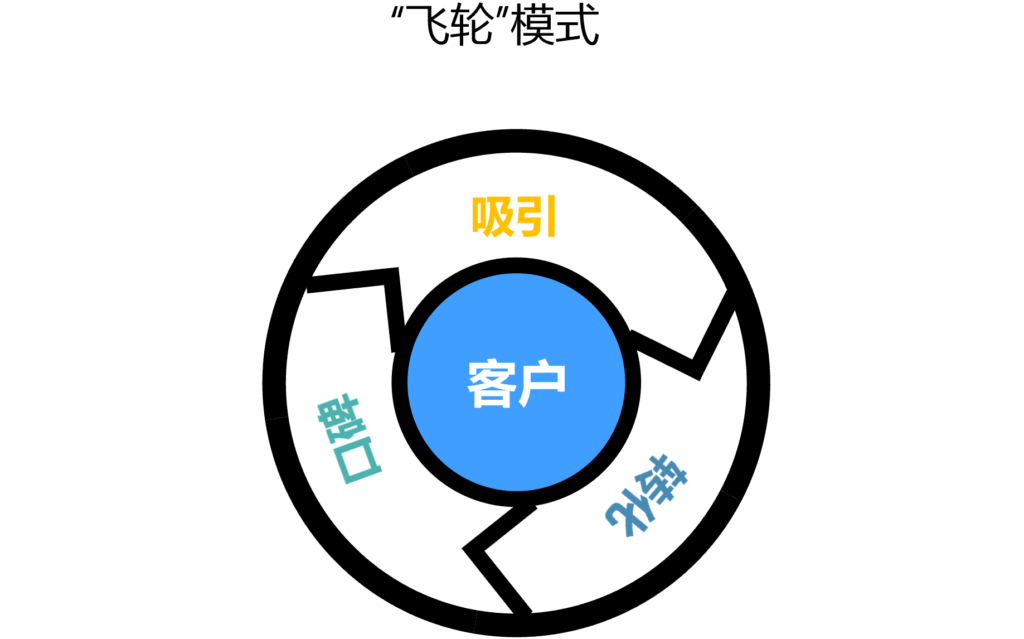
Knight calls this the “flywheel” model — Your Marketing Should Be a “Flywheel,” Not a “Funnel” (Part 1). The inbound philosophy permeates and accelerates the flywheel’s closed loop — attracting customers, converting them, and turning them into advocates — helping your business grow faster and more sustainably.
What Does “Inbound” Really Mean?
“Inbound Marketing” can also be described as pull marketing, attraction marketing, or permission marketing. For a deeper look, see our article Why B2B Companies Need Inbound Marketing. Once visitors land on your website, your marketing team can engage them through conversational tools — live chat, WeChat Official Account messaging, or email — gradually introducing them to your brand’s value at each touchpoint. Once they become customers, your service team should support them with empathy and an advisory mindset. We call such teams “Customer Success Teams.” The trust built through this approach becomes a self-reinforcing engine for continued customer acquisition.
Inbound marketing integrates attraction, conversion, and advocacy into a single cohesive strategy that helps businesses build value and earn genuine trust with their audiences. As technology evolves, inbound marketing will guide companies toward more human and effective ways of doing business — empowering better marketing, smarter selling, and superior service. Because “customer success” equals “business success,” that is exactly the philosophy behind Knight’s free starter plan. We want to do our part in helping small and medium-sized businesses thrive.
Attract: Drawing the Right Audience — See Also: How to Plan a Successful Content Marketing Strategy
The target audience you want to attract is inseparable from the buyer personas you build, and that relationship sits at the heart of inbound marketing. To reach your audience, you must first create genuinely valuable content and publish it where your audience already spends time — blogs, your website, and social media. Content can include product how-to guides, case studies showing how your solution addresses customer challenges, testimonials and reviews, and promotional offers that resonate with high-intent buyers. To deepen engagement, apply SEO best practices to all of this content. While the Chinese market often favors the faster results of SEM, SEO delivers greater long-term value. A solid SEO strategy requires weaving specific keywords and phrases throughout your content — terms that relate to your products or services, the challenges you solve, and the ways you help your target audience — so that the right people can find you quickly on the search engine results page (SERP).
Convert: Turning Prospects into Customers
When your inbound strategy successfully attracts prospects, the next priority is ensuring that every interaction and communication creates a desire to move forward and builds a foundation for a long-term relationship. This means progressively communicating the value your company can deliver, layering in information at each touchpoint rather than overwhelming prospects all at once. Practical tactics include coaching your team on how to handle inbound sales calls — particularly how to engage interested callers and prospects — and, most importantly, ensuring your team focuses on providing solutions rather than simply selling products. This solution-first mindset is what produces genuinely win-win outcomes.

Delight: Turning Customers into Advocates
Keep in mind: the delight strategy is not only about making existing customers happy — it also means ensuring that every prospective customer has a positive experience at every touchpoint, even before they buy. Beyond having your team act as trusted advisors and subject-matter experts (providing expert service is, in itself, a trust-building process), this stage requires demonstrating integrity, transparency, and thoroughness at every step — whether that relates to methodology, pricing, features, or service. The single overarching goal is to earn customer trust. — Your Marketing Should Be a “Flywheel,” Not a “Funnel” (Part 1). Where appropriate, deploy chatbots to provide attentive, real-time support that delights customers around the clock. Many companies also send customer satisfaction surveys approximately six months after a purchase to collect feedback and identify areas for improvement.
Social listening is another powerful delight tactic. Your social media followers may ask questions, share feedback, or post about their experiences with your products or services through your brand’s channels. Actively monitoring these conversations and responding promptly demonstrates that your company genuinely values and cares about its community.
Finally, Knight would like to leave you with the essence of inbound marketing: it is about consistently providing valuable information and support to people whether or not they have made a purchase. Remember, every customer who has a delightful experience becomes a brand ambassador and a growth driver. So handle every interaction with care — no matter how small the detail.