
B2B Product Cold Start: Should You Cultivate Early Users or Seed Users?
Value seed user feedback, build lasting engagement, partner with external ecosystems, and align internal resources.
When it comes to cold-starting a B2B product, should you focus on cultivating early users or seed users? Many B2B product managers find the distinction confusing. Before diving in, consider these questions:
What do you mean by “early users”?
What do you mean by “seed users”?
Are early users and seed users the same thing?
Can seed users only come from your initial user base?
How do early users transition into seed users?
Acquiring seed users for a B2B product requires product managers to think with a broader strategic lens — going beyond product development to understand policy environments, market dynamics, business operations, and customer needs.
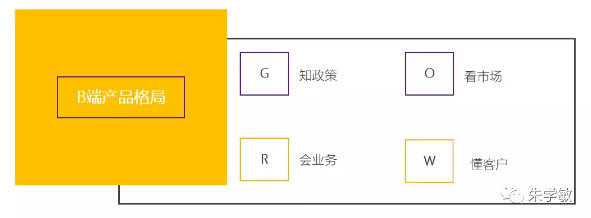
- Understand policy: Know the local laws, regulations, and compliance requirements relevant to your industry. This prevents your business from straying into legal gray areas or crossing regulatory red lines — particularly critical in sectors like financial data aggregation or SaaS platforms.
- Read the market: Market conditions and trends shape your product positioning and business model. You need to continuously adapt your product strategy to capture emerging opportunities — whether through marketing campaigns, channel partnerships, or other go-to-market initiatives.
- Master the business: B2B products live and die by business outcomes. The prevailing mindset is “business first” — meaning product decisions should be driven by operational needs and enable requirements to be delivered quickly. This applies to strategic questions like product architecture and business model design.
- Know your customers: Maintain close relationships with users who are deeply embedded in your platform or who generate additional value from it. Use empathy to uncover genuine user needs — informing user profiles, behavioral analysis, and ongoing operations.
Seed users are target users who increase product engagement and stickiness, and who provide actionable feedback and improvement suggestions for product features.
During a cold start, seed users help validate the product’s business model or test user growth hypotheses — providing the foundation for building a strong MVP from zero to one.
For B2B products, acquiring seed users is the most critical phase of the cold start. Seed users are not simply your first users — they are your first loyal users: target customers who generate genuine additional value.
To move from early users to seed users, define measurable criteria around engagement, conversion, and stickiness to identify who qualifies.
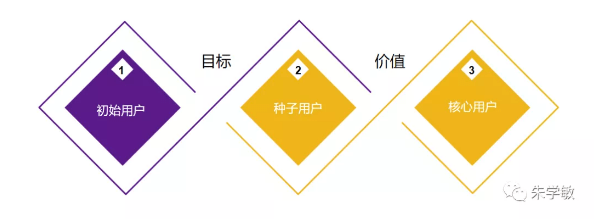
The goal is to identify users from your initial base who meet these criteria.
Common methods for acquiring seed users include: competitive migration, targeted invitations, key opinion leader (KOL) partnerships, traffic platforms, viral referral campaigns, and offline outreach.
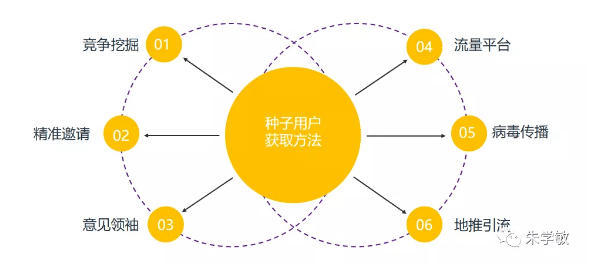
Consider how Zhihu leveraged KOL recommendations, or how Hammer Technology built pre-launch buzz — both used seed users strategically to refine their products and build lasting brand credibility.
When acquiring seed users, balance quantity and quality. In the early phase, focus on specific features or a single product and prioritize volume growth through user referrals. In later phases, shift toward business model expansion and ecosystem building, where user conversion quality becomes the priority.
That said, for product positioning purposes, seed user quality matters more than quantity — because these early users shape how the broader market perceives your product.
Given that B2B products inherently have a smaller addressable user base, acquiring seed users also requires a deliberate operational strategy. The key principles are: heavy on service, light on experience, high enablement, low coupling.
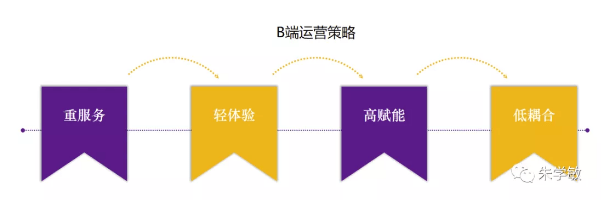
- Heavy on service: Offer free and value-added services while setting up behavioral data tracking. This generates the data you need to build accurate user profiles and inform future operational strategies.
- Light on experience: Ensure core features work and business workflows run end-to-end with accurate results. Deprioritize UX polish — functional correctness matters more than interface refinement at this stage.
- High enablement: Use data to power use cases across finance, e-commerce, healthcare, insurance, supply chain tracing, blockchain, and other verticals — then translate those domain outputs into monetizable value.
- Low coupling: Move away from embedded H5 integrations with third-party partners; replace data pass-through with API connections to decouple front-end and back-end functions, creating a seamless experience for end users.
Beyond these principles, make it a priority to listen closely to seed user feedback, cultivate long-term relationships with them, collaborate with your external ecosystem, and align internal resources behind their success. By delivering high-quality content and services to seed users — and executing your operational strategy with speed — you create the conditions for organic, seed-user-driven growth.
This article was originally published on the WeChat public account “Zhu Xuemin,” authored by Zhu Xuemin.