
The Struggle of Traditional Retailers: Why "New Retail" Is Easier Said Than Done
Evolve or be left behind — that is the existential question every traditional retailer must now face.
Chen, who loves spending her weekends browsing the city center’s shopping malls, recently noticed that one of her regular British fast-fashion stores had quietly shut its doors. When she searched online, the brand’s official website was gone too.
That was the fourth apparel brand she liked to exit China in the past two years.
“The styles were great, the fit was comfortable, and the price-to-value ratio was hard to beat — you could pick up several pieces at once without feeling guilty about it.”
Traditional Retail Under the Gun: The Awkward Aftermath of the “New Retail” Craze
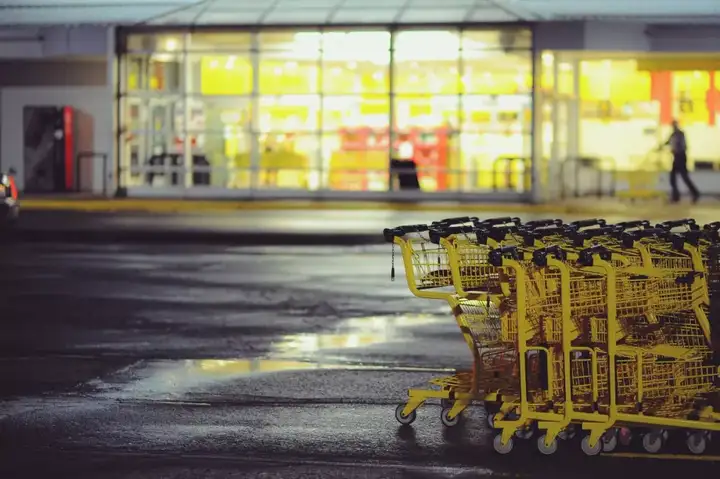
Beyond the steady string of fast-fashion exits from China, the “New Retail” concept — once pursued with near-religious fervor by brands and investors alike — is facing serious public scrutiny. High-profile pioneers like Super Species and Hema Fresh, once hailed as poster children of the movement, have had to shut or restructure locations. Meanwhile, smart shelf systems and unmanned retail concepts that entrepreneurs rushed to deploy just a year or two ago have quickly lost their appeal. Smart shelves are being pulled en masse; unmanned retail, while slowly spreading, has failed to ignite real excitement — and some critics have noted that the biggest irony of “staffless” retail is that it often isn’t truly staffless at all.
At the same time that brick-and-mortar retailers are struggling, some originally online-only brands — such as Yitiao and Xiaohongshu (RED) — have started opening physical stores. Their bet: combine online service capabilities with offline experiential touchpoints to build brand equity and sustain growth.
The line between online and offline is blurring, with each channel carrying distinct advantages while a maturing logistics industry continues to draw them closer together. But managing both channels well is far from simple. On one side, offline marketing is growing more expensive and less effective. On the other, the era of easy online traffic growth is over — many proven playbooks no longer work, and new tactics become obsolete almost before brands can master them.
How to win at retail — whether through incremental upgrades or wholesale reinvention — has become a fundamental survival question that every major brand must now answer.
The Three Pillars of Retail: People, Product, and Place — All Transformed
Whether old retail or new, every transaction still comes down to three elements: people, product, and place. Who buys? People. What do they buy? Products. And how does the exchange happen? Whether online or offline, a venue of some kind is always needed to bring buyers and sellers together.
People: The shift in consumer expectations is unmistakable. A generation ago, simply meeting the basics — food, clothing, shelter, transportation — was enough. Consumer behavior was closely tied to broader economic conditions and disposable income levels. But as China entered the information age, needs evolved dramatically: from baseline necessities toward a desire for quality, service, and personal expression. People once wore a single garment for years, patching it up and passing it down to younger siblings. The goal was simply to be clothed and warm. Today, people might buy several new items each month — different colors, different cuts, different styles — all in pursuit of looking and feeling good.
At the base of Maslow’s hierarchy sit physiological and safety needs. China’s rapid economic growth since opening up has largely satisfied those needs for the majority of the population. Modern Chinese consumers have moved well up the pyramid into the realms of social belonging, esteem, and self-actualization — and this shift fundamentally redefines the “people” dimension of retail.
Product: Goods used to be scarce. Buying rice required ration tickets. Throughout much of the industrial era, the winning formula for brands was simple: develop as many product categories as possible and manufacture them at scale. Quality was secondary — consumers had limited exposure to alternatives, their expectations were modest, and demand far outstripped supply.
That era is over. China’s markets are intensely competitive. Any business that doesn’t face prohibitively high barriers to entry and has a large enough addressable consumer base will quickly attract a flood of competitors at every scale. In most categories, oversupply has become the norm and prices have raced to the bottom.
And yet, even in this environment, brands must still make products that are genuinely better than before. Consumers who feel let down will immediately switch to a rival offering that costs less and works better. That is the new reality of “product” in retail.

Place: The concept of a retail venue was born from necessity. When people needed to buy things but couldn’t simply conjure them at home, markets emerged — fixed locations where sellers and buyers could meet and transact.
Before the internet age, consumers headed to nearby shops or malls on weekends to get what they needed. Choice was limited, and “comparison shopping” meant visiting only a handful of stores nearby. Retail went through a “channel-is-king” era in which the brand with the most physical locations — blanketing consumers until they had nowhere else to turn — won the game.
Today, consumers can complete a purchase in under a minute while scrolling on their phones during lunch. Breaking the constraints of physical space means consumers can buy anything, anytime, from anywhere — and that has permanently upended the “place” dimension of retail.
Regardless of how contested the “New Retail” narrative may be, retail’s fundamentals haven’t changed. But the transformation of people, product, and place demands a fundamental reset in how brands operate. They must shift from mass manufacturing toward precision-crafted, high-quality production; evolve their attitude toward customers from “take it or leave it” to a genuinely “customer-first” orientation; and move beyond channel dominance toward omni-channel reach and decentralized distribution.
Underlying all of this is one critical truth: among the three pillars of retail, people are the core. No matter how everything else changes, every business must anchor its strategy to the human being at the center.
Listening to What Customers Say Is Not Enough
A customer-centric strategy sounds straightforward — just listen to what consumers need. But in practice, it consistently falls short. The most disruptive innovations don’t succeed because they created something from nothing; they succeed because they delivered something consumers desperately needed but could never have articulated themselves.
In the age of horse-drawn carriages, if you asked customers what they wanted, they would have said: a faster horse. A carriage maker who took that answer at face value and invested heavily in breeding better horses would have met a very unhappy ending.

Consumers’ real needs — their deeper underlying needs — are hidden beneath the surface. The person driving a carriage didn’t actually want a better horse; they wanted to travel faster. That insight gave the world the automobile, and changed how people live. By contrast, the inventor who mounted a tiny electric fan on a pair of chopsticks to cool down noodles addressed a stated desire while solving no real problem — an amusing novelty, nothing more.
So if you can’t simply ask customers what they want, how do you uncover genuine needs? The answer is discovering and surfacing insights from data. Has this customer ever purchased your product? What websites do they visit regularly? What apps do they use? When did they last interact with your brand, what triggered the purchase, and where was it made? How much time passed between that first interaction and the next, and why? These questions open up into an entire ecosystem of behavioral signals that brands must systematically study and decode.

Consider this scenario: a consumer regularly purchases a specific sanitary pad from Brand A. The brand’s system tags this person as female and proceeds to push promotions for other women’s products — lipstick, makeup remover wipes — month after month, with zero conversion. The reality? This consumer is a man who buys sanitary pads monthly on behalf of his busy wife. At home, there is a toddler not yet in preschool, cared for by a grandparent.
Every piece of marketing Brand A had sent to this segment was completely wasted. If brands could build fuller, more multidimensional consumer profiles — constructing accurate and scientifically grounded personas — the ROI improvement on marketing spend would be substantial.
Rather than defaulting to women’s product promotions, this consumer should receive a personalized, layered marketing mix: regular notifications about household product deals; men’s mid-life product recommendations during relevant holidays; elderly care product content in the right season; and baby product suggestions as needed. That is what genuine consumer insight looks like, and it is the foundation for hyper-personalized, one-to-one marketing at scale.
Higher Costs, Fiercer Competition, Fewer Customers: The New Challenges Facing Retail
Whatever perspective one holds on the definition of “New Retail,” the underlying reality is clear: traditional retailers are not chasing new buzzwords for the fun of it. They are pivoting because existing marketing strategies are losing effectiveness, and they must find new approaches to break through.
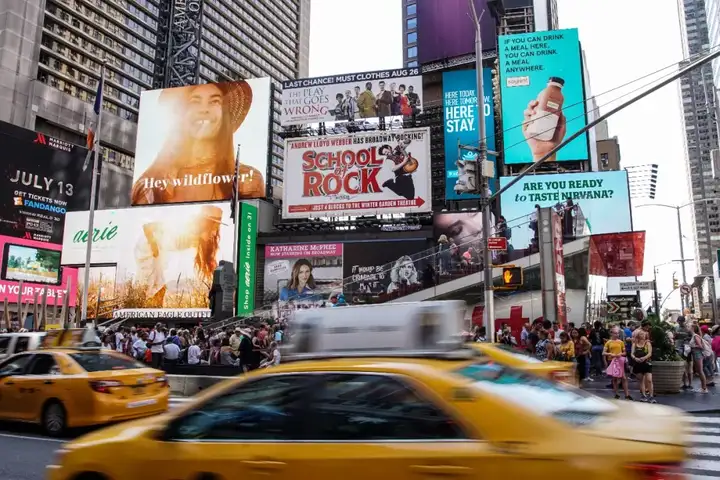
Rising costs, diminishing returns: There was a time when brands could invest a few hundred thousand — or even a few million — yuan in traditional advertising (outdoor, print, early WeChat KOL partnerships) and see meaningful results. As the number of available channels multiplied, so did the competition for attention and the cost of placement. In 2016, video influencer Papi Jiang’s first sponsored post sold for RMB 22 million — more expensive than prime-time television slots. From an ROI perspective, this is hard to justify. Even for brands with deep pockets, chasing expensive placements is a short-term gambit, not a sustainable strategy. A brand that pours its entire budget into external paid media is simply accelerating its own erosion.
Intensifying competition: This is a brutal market reality. Achieving product-market fit and building scale is no guarantee of permanence. History is full of companies that dominated their categories only to be overtaken seemingly overnight. Complacency is not an option — as soon as a product or category gains traction, new entrants flood in and begin fighting for share. Even well-established industries are perpetually at risk of disruption from unexpected directions. Camera manufacturers didn’t see the smartphone coming. Postal services didn’t anticipate the internet. SMS was killed by social messaging apps. Brands must track not just direct competitors, but also disruption risk from adjacent and entirely different industries.

Where did my customers go? The central challenge in retail is capturing and retaining people. So where are consumers today? Television advertising once reliably drove foot traffic and transactions — that era is largely over. Even the internet itself has shifted from a landscape dominated by a handful of BAT giants controlling information distribution, toward a highly fragmented, decentralized ecosystem. Consumers no longer congregate in a few predictable places; they are scattered across dozens of different platforms and communities.
A consumer who was once just a Tieba forum user might now run five or more apps — Bilibili for video, Kuaikan for manga, niche anime discussion boards, and only then, as an afterthought, the legacy platforms like Tieba that used to be dominant. Tieba is now just one item on a long list.
This is why brands feel that consumers are harder to reach and conversion numbers are shrinking. Traffic is no longer concentrated — it is dispersed across a long tail of platforms and touchpoints. Only brands that pursue a truly multi-platform, cross-channel, omni-space presence can generate enough reach to drive meaningful conversion and fuel business growth.
The Customer Internet: Powering New Marketing to Enable New Retail
The internet has transformed consumers’ lives beyond recognition, while simultaneously posing an existential challenge to traditional retailers. How do you identify and reach potential customers before your competitors do? How do you convert consumers who have already encountered your brand? How do you build an entire strategy around the human being at its center?
The “Customer Internet” — a marketing concept developed by Knight founder Chen Ji — is precisely the kind of systemic marketing solution that brand operators need today. It leverages advanced technology to deliver full-domain, fully automated digital marketing, helping brands systematically break through the barriers outlined above. Knight’s Customer Internet framework is built on five interconnected modules that form a closed-loop system:
Social
- Break away from traditional one-way marketing; upgrade brand-to-consumer communication to genuine point-to-point dialogue
- Cross-channel, cross-space, cross-time engagement
- Build a proprietary and effective private traffic pool that the brand owns and controls ……
Insights
- Activate big data to understand consumer purchase intent, value expectations, behavioral patterns, and decision journeys
- Deliver the right information to consumers at the right moment, increasing marketing effectiveness and conversion rates ……
Loyalty
- Data-driven, individually tailored loyalty programs
- From personalized service to personalized rewards — deepening customer stickiness
- Unified benefits across online and offline channels, optimizing the consumer experience and strengthening brand affinity ……
Retail
- Bring an internet-native mindset to physical retail locations; create richer, blended shopping experiences that bridge the digital and physical worlds
- Connect stores, products, frontline staff, and consumers into a seamless, end-to-end customer journey
- AI-powered behavioral insights from offline interactions, enabling continuous optimization of in-store products and service ……
Growth
- Amplify the customer relationship lever — harness viral, word-of-mouth mechanics to encourage sharing, reviews, and peer-to-peer discussion; drive brand self-propagation; use existing customers to acquire new ones
- Rebuild key customer Moments of Truth (MOT); respond rapidly when dormant consumers re-engage; increase purchase conversion through high-frequency, high-relevance marketing interactions that drive high-frequency consumption ……
The road ahead for traditional retailers navigating the New Retail transition remains long. But the brands that will survive and thrive are those that move fast enough to keep pace with the times — and emerge, with composure, as the ones still standing at the end.