
Top Salespeople Know How to Choose Their Customers — A Practical Guide to Lead Scoring
No customer is born a great customer. Choosing the right customers is one of the most critical decisions a business can make — and lead scoring is the systematic framework that makes that decision rigorous.
No customer is born a great customer. Choosing which customers to pursue is one of the most consequential decisions a business makes — and it carries real opportunity costs in capital, time, and headcount. Back the right customer and you win big; back the wrong one and you bleed. In competitive markets, poor lead management leads directly to losses and wasted effort. Yet remarkably few companies have ever codified a clear set of criteria for selecting their customers. That is exactly the problem lead scoring is designed to solve.
What Is Lead Scoring?
Lead scoring is a structured tool for precisely qualifying potential customers. In markets where marketing automation is mature, most companies implement a lead scoring mechanism immediately after acquiring a new lead. The mechanism produces an objective ranking of leads, ensuring that the highest-quality opportunities receive prompt attention. More importantly, the process of defining scoring rules is itself the process of defining what a genuinely good customer looks like for your business.
Lead scoring requires marketing and sales to collaborate on defining the scoring criteria together. With the rise of inbound marketing, a prospect may already have had multiple touchpoints with your website, mini-program, H5 landing pages, or emails before you ever capture their details. Compared with the unreliable data collected via a cold phone call or a generic web form, implicit behavioral signals are far more predictive of real purchase intent — and the scoring system should weight them accordingly. This same mechanism also drives lead nurture efficiency during the cultivation phase.
Why Use Lead Scoring?
1. Scoring forces your company to define “what a good customer actually looks like” in concrete, quantifiable terms.
Every company claims to know its target customer. In practice, most target-customer definitions are vague narrative descriptions with no measurable thresholds — which means frontline staff cannot act on them consistently. Take a common example: “We target mid-to-large enterprises in Industry X.” But how many employees defines mid-to-large? What revenue threshold? Everyone has a different mental model. The outcome is predictable: marketing chases lead volume without regard to quality; sales runs exhausting spray-and-pray outreach; and the target-customer definition exists only on paper. Lead scoring fixes this by forcing the team to assign specific numeric criteria — headcount bands, revenue ranges, and so on — and assign point values to each tier, creating a formal customer segmentation that everyone can execute against.
2. Scoring aligns marketing and sales on a shared definition of MQL, turning two often-misaligned functions into genuine partners.
In early-stage B2B marketing, marketing typically hands off at the lead-to-opportunity stage and stops tracking what happens after sales takes over. Because the two teams have different KPIs, they operate with different priorities: sales cares about closing deals and needs high-quality pipeline to do it; marketing cares whether opportunities are being followed up and converted. Without a shared standard, miscommunication and blame become inevitable.
The institutional logic behind lead scoring is to unify marketing and sales on a single definition of the Marketing Qualified Lead (MQL). Because both teams co-own the scoring model, they reach explicit agreement on what constitutes a qualified lead. With shared metrics in place, marketing has a clear signal for adjusting campaign strategy, while sales has a clear trigger for prioritizing follow-up — reducing lead decay and improving conversion rates for both.
How Do You Build a Lead Scoring Model?
The ultimate goal of any marketing investment is revenue growth: acquiring a growing base of customers efficiently and at low cost. A revenue-oriented lead scoring model should focus on three dimensions:
- Buying power
- Awareness of and receptiveness to your product or service
- Level of interest and stage in the buying journey
Here is how each dimension plays out in practice for a B2B company:
1.The prospect’s buying power
A prospect’s buying power determines whether they can afford your price — yet accurate budget information is rarely available early in the sales cycle. In B2B marketing, you can often infer buying power indirectly from firmographic data: company size, annual revenue, registered capital, and similar signals that are publicly queryable. Several business intelligence tools on the market provide this data; Knight CRM has integrated with Qichacha, allowing you to query corporate registration information directly by company name.
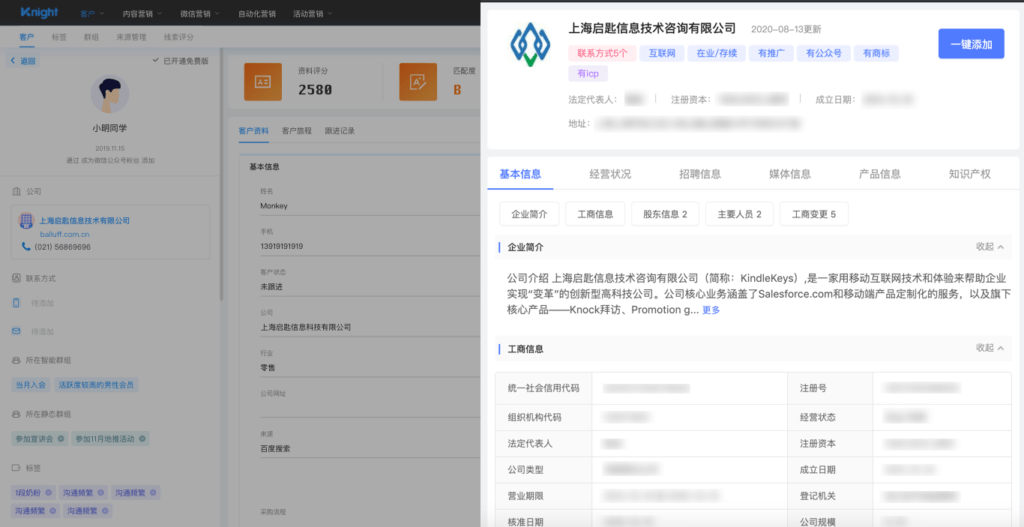
Based on our work with clients, the following “free signals” — obtainable from public records or a standard sign-up form — are effective proxies for a company’s financial strength:
- Number of employees
- Year of establishment
- Registered capital
- Entity type
Note that none of these signals carries a universal judgment. A company with 1,000+ employees is not automatically more valuable than one with 15–50 employees — it depends on your product strategy and pricing model.
2. The prospect’s awareness of your product and service
B2B purchasing is an organizational decision, but it is made by individuals. The personal profile of the contact who owns the evaluation directly shapes how they perceive a new solution.
When a new product enters the picture, the typical prospect tends to overvalue whatever they are already using. Unless the benefits of switching are dramatically greater than the switching costs, they will not buy. At the same time, a smaller group of early-adopter prospects exists in every market — people with more forward-looking judgment who place greater weight on future gains and are predisposed to respond strongly to a compelling value proposition. As the saying goes, perspective is shaped by position. A contact’s education, department, title, and decision-making authority are all meaningful signals. Drawing from past client engagements, the following personal dimensions have proved useful for assessing product awareness:
- Job title
- Functional role
- Educational background
- Management level
- Purchasing decision authority
Because prospects with lower product awareness require significantly more time and effort to educate, they should be routed into automated nurture workflows rather than handed to sales prematurely.
3. The prospect’s interest level and buying stage
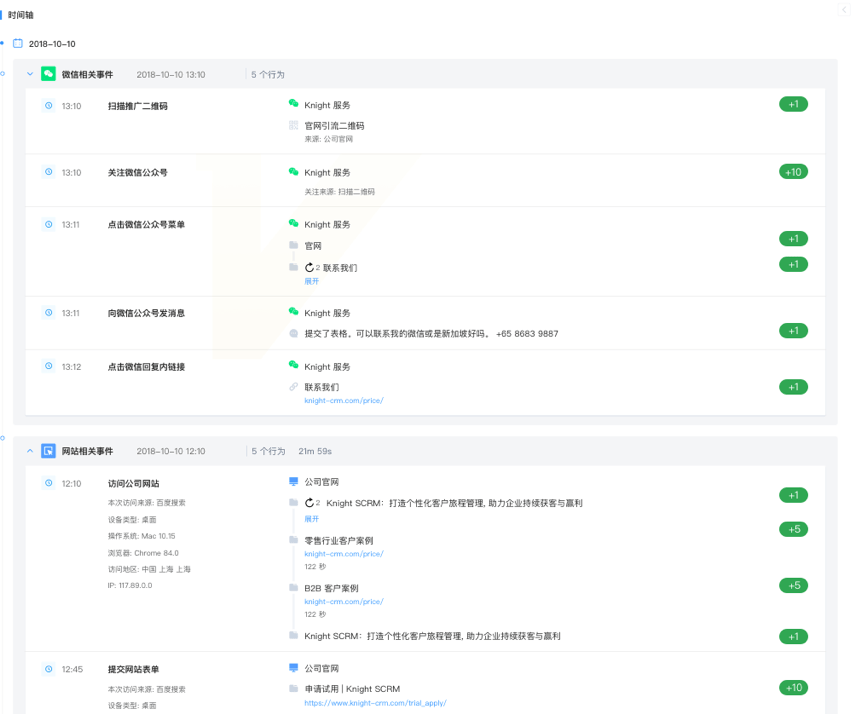
The rise of inbound marketing means today’s prospects begin researching and even proactively engaging with vendors long before they have a confirmed budget or timeline. Even when a prospect is sold on your value proposition, that does not mean they are actively evaluating your specific product (competitors exist), nor does it mean their organization is ready to buy. Bringing sales in too early — before the prospect is in an active buying stage — wastes the salesperson’s time, displaces other higher-quality opportunities, and can permanently alienate the prospect through premature, intrusive outreach. Most prospects will not tell you where they are in their decision cycle, but their behavior will.
Lead behavior can be categorized into two types: direct behavior and latent behavior.
Direct behavior refers to actions with a high correlation to purchase intent — requesting a demo, viewing a pricing page, searching for the company name — and typically signals readiness with little ambiguity. Latent behavior cannot be interpreted on its own but reveals interest through the accumulation of weighted actions over time: visiting the website, following the company’s WeChat Official Account, downloading a whitepaper, attending a webinar, and similar signals. Direct behaviors carry significantly higher point values than latent ones. When a prospect’s total score is high and their buying-power and awareness profiles are a strong match, the lead can be handed to sales for immediate follow-up.
How Do You Use Lead Scores to Drive Business Decisions?
Knight divides lead scoring into static scoring and dynamic scoring. Static scoring evaluates the prospect’s identity attributes — job title, industry, company revenue — to measure how well they fit your ideal customer profile. Static scores do not change based on marketing activity. Dynamic scoring reflects the prospect’s interest level, calculated from behavioral weights and the frequency of engagement.
An effective lead scoring model must evaluate both dimensions simultaneously. Never rely on job title alone. A highly-matched prospect who has never attended a webinar or downloaded a whitepaper may score lower than a slightly less-matched prospect who is actively and repeatedly engaging with your content.
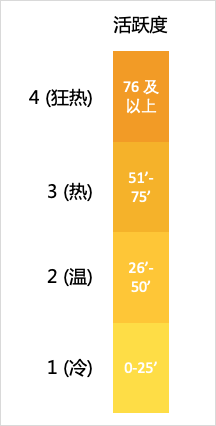
Once scoring is in place, you segment your leads by score range. For example, you might divide the dynamic score into four buckets — Cold / Warm / Hot / Engaged — each with a defined numeric range.
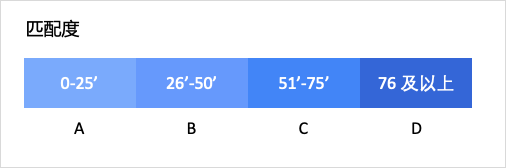
Similarly, the static score is divided into four tiers — A / B / C / D — each with a defined range.
When both dimensions are combined, you get a 4×4 matrix of 16 scoring segments. Every prospect in your database lands in exactly one segment. As a general rule, prospects in the upper-right quadrant — high static fit combined with high dynamic engagement — represent the highest value and the greatest likelihood of conversion.
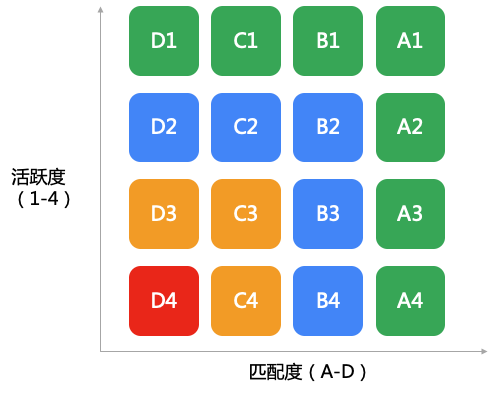
From there, you can assign the right follow-up action to each segment: route high-scoring prospects to sales for immediate outreach, or keep lower-scoring prospects in the nurture pool for continued cultivation.
Automation
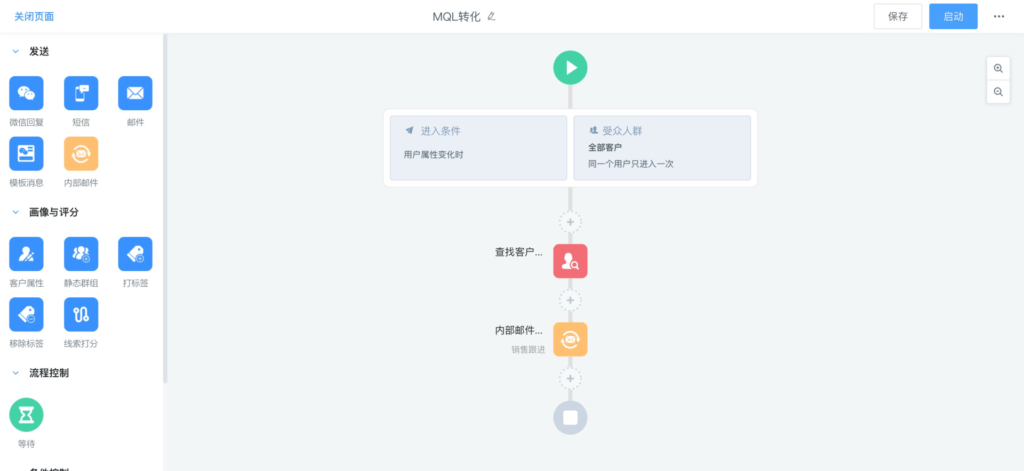
Once Knight’s lead scoring system has identified a high-quality prospect, timely follow-up is what turns that score into a conversion. By adding automated workflows — for example, triggering an email alert to a salesperson the moment a lead crosses a defined score threshold — you ensure that no hot lead goes cold while waiting in an inbox.
Conclusion
Not all leads are created equal. Lead scoring gives marketing and sales a shared framework for focusing energy on high-quality opportunities — and for stopping them from wasting time on prospects who are not a fit or simply are not ready to buy. A well-designed scoring model is the foundation of a high conversion rate. If you would like to explore the mechanics in more detail, see The Lead Scoring Rulebook: A Full Breakdown.