
Is 'Positioning Is Dead' Just a Lie?
How should 'positioning' be reimagined for the mobile internet era?
Positioning theory — once revered by marketers as near-sacred doctrine — has faced mounting skepticism in recent years. The claim that “positioning is dead” has been circulating for quite some time.

Perhaps the most prominent example is a 2016 essay by Chinese entrepreneur Diaoge (Andy Huang), published as a Lakeside Notes entry titled “Traditional Brands Are Disappearing”:
“I was once a steadfast defender of positioning theory. But I am now profoundly pessimistic. The great theory of positioning will be utterly useless in the face of tomorrow’s i2M world. All traditional advertising agencies might as well dissolve now… In this revolution, classical advertising theory has no role to play whatsoever.”
There was also one famous episode that seemed to prove the critics right.
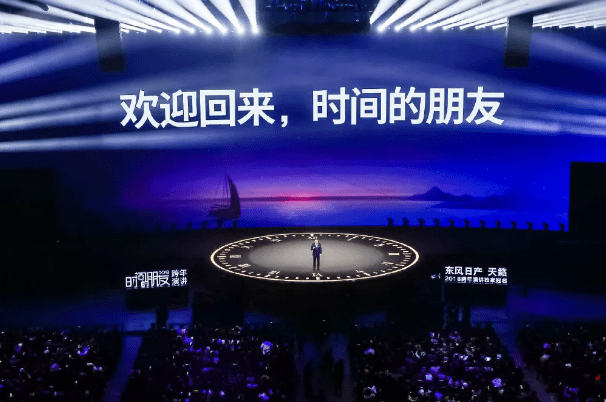
In 2015, Deng Delong, CEO of Trout & Partners China, publicly challenged Lei Jun, warning that Xiaomi’s strategy had gone off course. Deng argued that Xiaomi’s push to build a broader platform and ecosystem was eroding the very positioning — “direct-to-consumer smartphones” — that had fueled its meteoric rise. Yet as of today, Xiaomi, which went public last year, commands a market capitalization of over HKD 210 billion.
Had Xiaomi stayed rigidly within the smartphone category instead of expanding into adjacent products, one can only imagine how bleak its prospects would be today. Still, Deng’s confidence at the time was not without basis. Brands like JDB (Jia Duo Bao herbal drink) and Xiangpiaopiao bubble tea were then shining examples of positioning theory in action — and both companies did eventually decline, in part tied to the very brand strategies that the theory had guided.
So, what exactly is “positioning”?
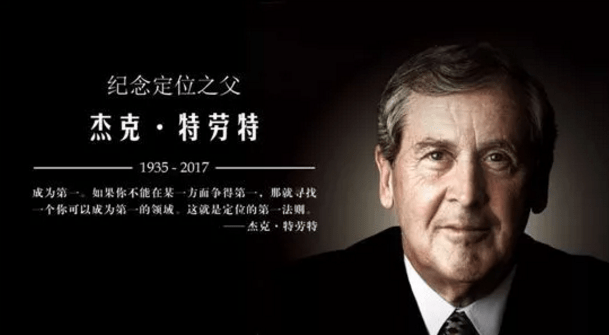
Jack Trout once said: “The key to commercial success is becoming different in the mind of the customer. That is positioning.”
Trout believed that applying positioning theory would give companies a durable competitive advantage. Yet today, we are surrounded by success stories that appear to defy that very principle — Xiaomi’s brand extension, JD.com’s category expansion, the influencer-driven fan economy. Each new example prompts the same question: in a business environment that never stops changing, does positioning theory still hold?
1. Positioning Theory: A “Wonder Drug” That Is Losing Its Potency
Google co-founder Sergey Brin once said: “The only thing we know for certain is that a large part of what we learned in the 20th century is wrong. The time has come to overturn the past and start again.”
We must first accept a fundamental premise: every theory has its limits. The meaning and value of any framework rest entirely on the conditions under which it was designed to apply. No single theory works for every brand at every stage of development. Even the most powerful laws of physics break down inside a black hole. Any worldview that treats one theory as universally applicable — where compliance means survival and deviation means death — is not science. It is dogma.
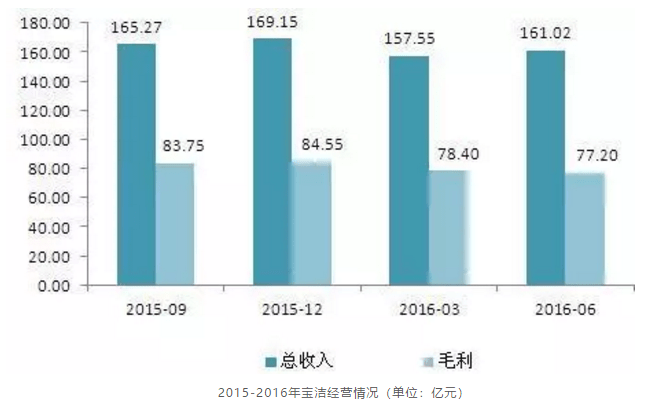
Positioning theory has been around for over 50 years. It crossed the Pacific into China and generated countless vivid success stories. Yet even Procter & Gamble — a company whose every product carries a sharp, distinct brand positioning, and whose marketing playbook has been emulated by generations of brand builders — could not escape the reality of brand aging and declining profits, ultimately forcing a wholesale strategic reset.

P&G Financial Performance, 2015–2016 (Unit: 100M CNY)
Whether it is Xiangpiaopiao or JDB, both brands rose on the strength of positioning — and both stumbled because of it.
When a brand becomes synonymous with a single narrow category, it loses room to grow. Rigid, unchanging positioning only accelerates a brand’s irrelevance as times evolve. Think of Kodak: defined entirely as a film company, it could not survive the shift to digital photography, and one of the world’s most storied brands went bankrupt.
2. The Shift in Business Logic: Positioning Has Lost Its “Category Shield”
At its core, every marketing methodology exists to build a complete chain between a brand and consumer purchase behavior. Before the mobile internet era, every approach to brand building started with the category: define “what category are we in?” first, then build the brand from there.
The logic went like this: identify a clear market position, then reinforce that position through various media channels, gradually building brand recognition in the consumer’s mind, so that when a need arises, the consumer naturally selects and purchases that brand. In short — pick the industry, slice the market as finely as possible along consumer motivations and attributes, then build the product around that slice.
That logic no longer holds.
In the mobile internet era, securing real estate on users’ smartphone home screens — rather than staking out a category position — is the primary objective for many companies.
The internet playbook works differently: aggregate a community of users first, then sell those users virtually anything, across categories. The category boundary becomes almost irrelevant.
This reveals a critical weakness in positioning theory’s insistence on category-led brand development. The internet can bypass the positioning step entirely and go straight to binding users around their daily contexts and scenarios.

As media entrepreneur Luo Zhenyu has argued: products are fundamentally connective intermediaries. In the industrial age, they carried specific functions. In the internet age, they connect people through shared interests and emotions — which further dissolves the boundaries between categories.
In this environment, positioning theory does not always apply. Activation-based tactics — community operations, performance marketing, influencer campaigns — often deliver far better results.
3. The Shift in Consumer Logic: Positioning Has Lost Its Footing in Consumer Relationships
Theory, it seems, always lags behind practice. Trout appears to have overlooked a more fundamental change: the transformation of the consumer mindset.
In today’s era of consumption upgrading, people buy not just for function but for what a product signals about their social identity, cultural sensibility, and lifestyle. Consumer demand is increasingly driven by the symbolic value of goods. Consumerism is trending toward extreme semiotic consumption — buying signs and signals, not just products.
Within the framework of positioning theory, brand growth is always anchored to category development: identify the market opportunity within the category, reinforce through communications, and crystallize that position in the consumer’s mind. Set aside, for a moment, how difficult it is to “reinforce through communications” in a fragmented, decentralized media landscape. The more fundamental question is: do today’s consumers even care about your rank within a category?
In the era of centralized mass media, products competed in the same shared arena. The consumer’s only real decision was whether to buy. Because of information asymmetry, consumers relied on brand category rankings to make purchasing decisions.
The mobile internet era dismantled the information asymmetry on which traditional commerce was built, and transferred control of information to consumers themselves. This shift in information power triggered a full reorganization of value chains. Users gained enormous influence, upending every business model that had depended on information asymmetry.
This is the crux of the matter. Positioning theory was a product of the centralized, mass-media era.

Consider shampoo as an example. Head & Shoulders still sits quietly on supermarket shelves — universally recognized as the number one dandruff-fighting brand. But Gen Z consumers are watching anime on Bilibili, getting a product recommendation from an influencer on a live-streaming platform, and buying a completely different shampoo brand on the spot. They never see the Head & Shoulders ad on state television. In this entire process, Gen Z and Head & Shoulders exist in parallel universes that never intersect.
The implication is clear: the centralized media foundation on which positioning theory depends no longer exists. Search-driven purchase has replaced recall-driven purchase.
Gen Z consumers do not particularly care where you rank in your category. In a world of personalized consumers, fragmented attention spans, and no authoritative arbiters of taste, consumers have far more agency. They participate in product development and brand decisions. Products must satisfy not just functional needs but deliver individualized experiences. The path to value creation has become far more complex and multifaceted.
Value is created through the interaction between product and consumer — not awarded automatically to the category leader. What consumers care about today is the product experience, and whether the brand’s personality and values align with their own. Without that experience, there is no buy-in. Without buy-in, there is no value realization. The reason brand loyalty can be so powerful today is that fans’ emotional and values-based identification with a brand outweighs any rational, functional consideration.
This is the consumer logic of the modern era.
4. How to Reconstruct “Positioning” for the Mobile Internet Age
In some respects, positioning theory belongs to the domain of marketing and brand strategy. But as the dimensions of consumer experience multiply, a brand is no longer the entirety of what a customer encounters. So what is the path forward?
Reframe Positioning Around “Lifestyle”
As Diaoge argues, every brand will ultimately become a lifestyle brand — defined no longer by category but by the values and ways of life it represents.
Look at the knowledge-commerce platforms that have surged in recent years — Luogic Show (Luojiesiwei) and Wu Xiaobo Channel. They have built massive followings by selling values and lifestyles, not products per se. The goods they offer are curated based on values and lifestyle alignment, not category coherence. Because they wrap everything in a values-and-lifestyle frame, even a wildly eclectic product mix feels completely natural to their audiences.
If we position a brand around a particular lifestyle — staking out ownership of that lifestyle in the consumer’s mind — we have, in fact, returned to the logical chain of positioning theory. The category has simply been replaced by the lifestyle as the fundamental unit of positioning.
Reconstruct Positioning Around People
As we have seen, whether we look at shifts in business logic or shifts in consumer logic, the constant at the center is always the person.
Positioning theory’s greatest contribution is this: build a clear, distinct piece of cognitive real estate for the brand, then use positioning to deliver that message to users. In an internet context, the traditional commercial logic of “build mental recall → attract purchase” is being thoroughly disrupted. Internet-native purchase logic now takes two dominant forms: “centralized search → purchase” and “decentralized social engagement → purchase.”
These two logics offer different paths for reinventing positioning. But regardless of which logic applies, the human being remains at the center.
At the core of everything, nothing changes. Positioning theory provides guiding principles for brands, but we cannot let those principles become a cage. Everything evolves — theories included. The environment shifts. The logic shifts. But people remain.
The most enduring insight positioning gives us is this: look for answers in the human mind.
That truth is the bedrock of marketing — yesterday, today, and tomorrow. And for that reason, regardless of the business model, the value of positioning never disappears.
We should also hold on to a deep respect for the classics. After all, it is only by standing on the shoulders of giants that we can see further.
*This article is adapted from the WeChat public account “Chief Marketing Officer” (首席营销官), authored by Li Dongyang, senior marketing practitioner.