2020: The End of 'Integrated Marketing' and the Rise of the Customer Journey Era
Every brand needs to build its own customer journey and become its own ecosystem — not just another player inside someone else's.
A couple of years ago, I attended the year-end advertiser summit hosted by one of China’s BAT giants. A marketing executive on stage was presenting an integrated marketing case study built around an S-tier variety show.
He explained that the platform’s marketing resources were becoming increasingly ecosystem-driven. Advertisers could go beyond video placements and spread their budgets across social media, e-commerce, live streaming, and news feeds — all orbiting a single IP. True integrated marketing, he said. I sat in the audience doing the math: the title sponsorship alone for that show ran roughly 100 million RMB. Layer in the ecosystem resources he described and you’d be looking at another 50 million on top of that.
But really — how many Chinese advertisers can afford to pour 150 million RMB into a single variety show? That’s precisely the uncomfortable reality “integrated marketing” has faced in recent years. The media landscape keeps fragmenting. We all know you need to consolidate channels to reach more consumers. But when you’re staring at a screen full of apps and a calendar packed with prestige dramas, no brand — however flush with cash — can realistically buy up every channel at once. It’s become clear that integrated marketing must evolve for today’s communication environment. We need to move from “integration” to “organic integration.”
Over the past two years, the phrase “integrated marketing” has quietly faded in China, replaced by a word that keeps coming up in every marketing conversation: customer journey (链路, literally “chain-path”).
- Alibaba’s “Omnichannel Marketing” framework introduced the AIPL model;
- Tencent explicitly championed “full-chain marketing”;
- This year, ByteDance launched its own journey model, the 5A framework;
- By year-end, iQIYI had unveiled its own version: AACAR.
So why has “customer journey” dethroned “integration” as the buzzword of choice among China’s media giants? What exactly is the difference? In my view, it comes down to this:
Integration is about occupying consumer mindshare. Customer journeys are about driving consumer behavior.
01 Integration vs. Customer Journey
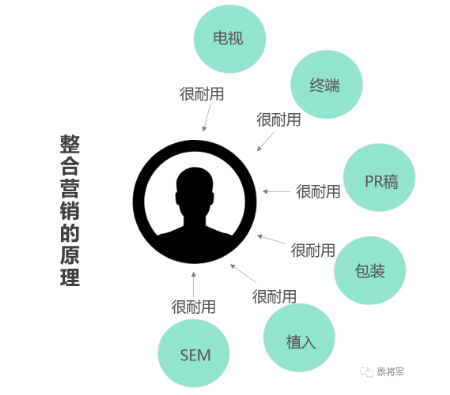
Let’s start with where integrated marketing came from. “Integrated Marketing Communications” (IMC) was coined by Don Schultz in 1991. The core idea: treat every marketing activity — outdoor ads, PR, SEM, content marketing, in-store promotions — as a unified whole, so that different communication channels collectively build a single, consistent brand image.
Put simply: integrated marketing means speaking with one voice, everywhere.
It’s not hard to see that IMC was born out of the information explosion. In an era of message overload, a brand might fire 100% of its information at consumers — and only 1% sticks. Consumers form incomplete, blurry impressions of companies. Schultz’s answer: pool all your communication channels and concentrate your firepower. “Focus effort in one direction and the returns will follow.”
So if integrated marketing seems so well-suited to today’s noisy media environment, why is it being supplanted by journey-based thinking? Three reasons:
First, information fragmentation has gone far beyond what anyone anticipated. Even Don Schultz himself probably didn’t foresee this. The information explosion wasn’t a bomb — it was a nuclear warhead. Marketers can no longer realistically consolidate all media channels. We don’t just need integration; we need a smarter, more efficient version of it.
Second, digital marketing has progressed to the point where advertising’s influence cycle has compressed dramatically.
The old advertising logic worked like this: because stores and ads were separate, brands had to distill their message into a poster or a 15-second TVC — something memorable enough that consumers could recall the brand when they eventually walked into a retail store. Digital marketing has collapsed that separation. Ads and storefronts are now one and the same. You see Li Jiaqi showcasing a lipstick on a Taobao livestream, and you can tap “add to cart” before he finishes the sentence. You scroll past a Kuaishou video of a Shanxi farmer picking crispy apples from his orchard, and a single tap gets it on its way to your door.
Advertising is no longer just about mental real estate. It can be a direct trigger for action.
Third, in 2019, the unspoken expectation behind every marketing brief was performance, not brand building.
Many brands paid lip service to the importance of brand advertising while quietly calculating ROI on every single spend. Tencent went so far as to merge its brand and performance sales teams, unifying its commercial resources to serve advertisers without distinction. And performance advertising has a defining characteristic that brand advertising doesn’t: it’s focused on the entire behavioral chain from first ad exposure to completed purchase.
With these three forces converging, “customer journey marketing” has become the new north star. But what exactly is a “customer journey”?
The customer journey evolved from integration — think of it as Integration Plus. It turns the old mechanical approach to integration into something organic. Where “integration” asks whether all your marketing resources are speaking with a consistent voice and image, “customer journey” asks: starting from a consumer’s very first ad touchpoint, what is the complete chain of behaviors that leads to a purchase conversion? The brand’s job is to show up at every critical decision point along that chain, coordinating its resources so each one plays a specific role in guiding the consumer toward a buying decision.
Take a concrete example: both Mengniu Sour Milk’s sponsorship of Super Girl over a decade ago and Mengniu Chunzhen’s sponsorship of Produce Camp 2019 were top-tier variety show investments. But the former was doing integration. The latter was already doing journey marketing.
Mengniu Sour Milk × Super Girl
Beyond the 14 million RMB title sponsorship fee (public data), Mengniu invested tens of millions more in a full-spectrum campaign surrounding the show — custom product packaging, in-store promotions, roadshows, outdoor advertising, press coverage, TV commercials, and contestant endorsements. It’s fair to say that Super Girl’s cultural explosion owed no small part to its title sponsor.

Mengniu Chunzhen × Produce Camp 2019
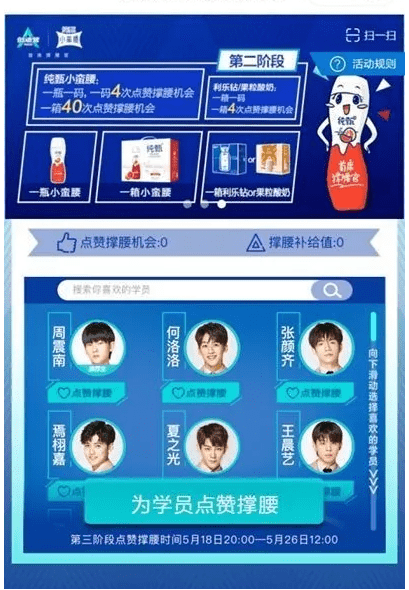
When Mengniu Chunzhen sponsored Produce Camp, it did everything the old playbook called for — and then some. But this time, there was a deliberate effort to build the critical chain from ad exposure to purchase. Chunzhen launched the “Support” campaign (撑腰活动), which invited fans to buy Chunzhen’s signature “Slim Waist” bottles to vote for their favorite trainees — one bottle earned four votes; a box earned forty.
- In-show audio and visual callouts explained the voting mechanics;
- Fans could open a WeChat Mini Program on their phones to cast votes;
- If they needed more votes, they could jump directly to an in-app store to purchase;
- After receiving the product, scanning a QR code on the bottle brought them back into the Mini Program voting page.
This is a compact but complete marketing chain — one that integrates the show’s ad inventory and turns each resource into a link in a behavioral sequence, progressively guiding consumer decision-making. The contrast becomes even clearer when you look at these two diagrams:
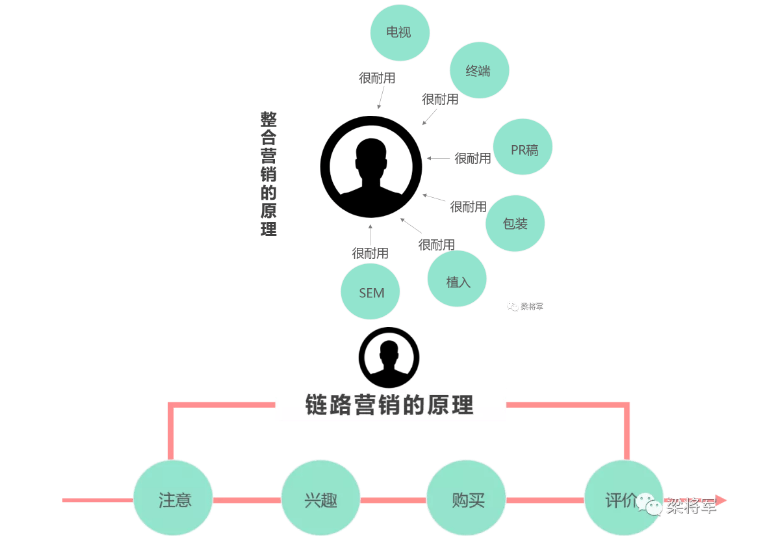

Can you spot the difference?
“Integration” amplifies a single voice across all channels — maximum volume, ideal for occupying consumer memory. “Customer journey” goes further: beyond consistency, it pays close attention to how each advertising touchpoint influences consumer behavior at each stage. It adds a time dimension on top of the spatial one. Its goal is not just awareness — it’s to move people to act.
That’s why: integration occupies mindshare; customer journeys drive behavior.
More seasoned marketers might raise an eyebrow here: isn’t “the customer journey” just a rebranding of the old AIDMA model that used to appear in every marketing deck? Isn’t this just recycling a classic framework under a new name?
02 The Customer Journey: A Concept That Has Never Stopped Evolving
AIDMA was proposed in 1898 by American advertising theorist Elias St. Elmo Lewis — arguably the earliest formalization of journey-based marketing thinking. Its greatest contribution was mapping the psychological process consumers go through from first encountering an ad to making a purchase:
- Attention — the consumer notices the ad
- Interest — it’s engaging enough to hold their attention
- Desire — it awakens a want to try the product
- Memory — it leaves a lasting impression
- Action — the consumer makes a purchase
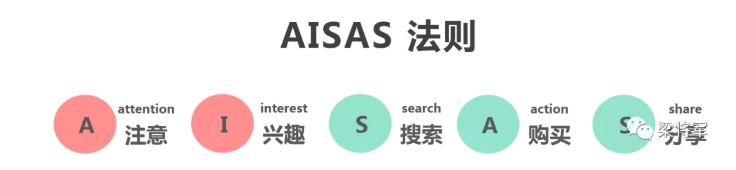
But the communication landscape of 1898 bears little resemblance to today’s. As the internet embedded itself deeper into consumer life, AIDMA could no longer accurately describe how people actually behave. In 2005, Dentsu updated the model for the digital age, introducing AISAS:
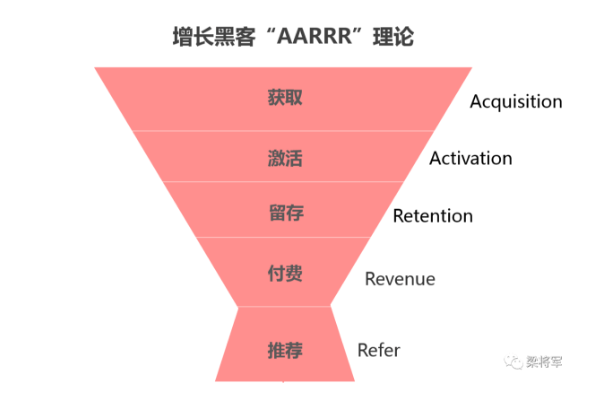
The first two stages of AISAS mirror AIDMA, but the final three evolve:
- S — Search: consumers actively seek out brand information
- A — Action: the purchase is completed
- S — Share: consumers share their experience and opinions
Dentsu’s model still holds up today, but it was designed for high-consideration product categories — cars, smartphones, real estate — where consumers deliberate extensively before committing. For something like a can of Coca-Cola, the Interest and Search stages are almost irrelevant; Attention leads directly to Action in a matter of seconds.
Then came the mobile internet era, and with it, a wave of internet-native businesses whose marketing goals looked nothing like those of traditional consumer goods companies. For them, the behavioral path shifted again.
Traditional companies market to sell products. Internet companies market to acquire users. Nongfu Spring wants to sell more water bottles. Momo wants more people to download its app. “User acquisition” replaced “brand awareness”; “retention” replaced “repeat purchase.” New marketing concepts emerged to serve the new economy, and legacy brand frameworks found themselves increasingly out of step.
Journey marketing evolved with it. The most prominent new model came out of the Growth Hacking movement: the AARRR framework.
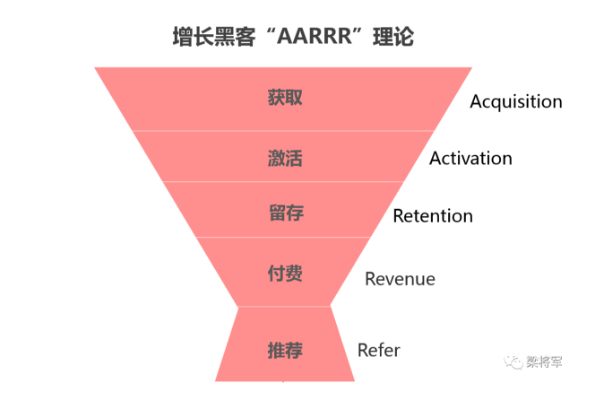
This model uses technical tools to shape user behavior paths, and helped companies like Facebook and Twitter achieve explosive growth through rigorously engineered, data-driven methods. The rise of Didi, Ele.me, and Pinduoduo in China owed far more to growth theory than to brand theory.
Growth Hacking champions a largely “post-advertising” philosophy: instead of buying media, redirect that budget into user subsidies and technical infrastructure. In a global economic downturn, that pitch has been warmly received by brand managers watching their ROI.
And 2019 was the breakout year for full-funnel journey marketing in China. Alibaba, Tencent, iQIYI, and ByteDance all spent their major marketing events preaching the gospel of the customer journey.
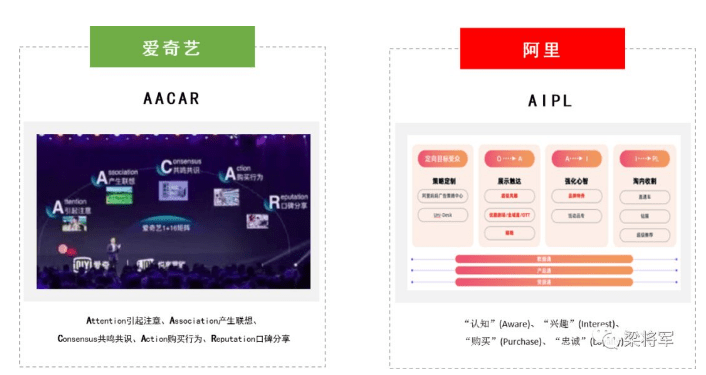
03 The Big Media Conferences and Their “Customer Journeys” — Real or Theater?
The frameworks above represent each platform’s version of full-funnel journey marketing. But are these polished models genuinely useful, or are they just marketing jargon dressed up for a conference stage? Let’s examine the principles that determine whether a customer journey actually works.
Principle One: The Chain Cannot Break
By definition, a journey is a sequence of interlocking links. A five-link chain with two links unconnected is a defective chain, not a functional one. Consider what happens when you try to apply the AISAS model to a car brand:
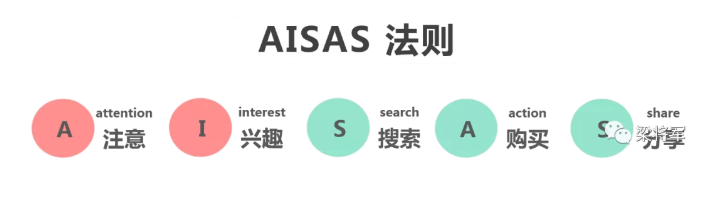
- A — The consumer regularly sees BMW ads on Youku;
- I — When they’re ready to buy, they visit an automotive forum, read up on specs, and land a test drive;
- S — They search Baidu for Benz, BMW, and Audi comparisons; they notice BMW has a current promotion;
- A — After leaving their number at the test drive, the dealership sales rep follows up persistently; they eventually decide on a BMW 7 Series;
- S — After some time behind the wheel, the brand pays forum members to share their driving stories.
Every step seems to follow consumer decision logic — but every step also risks snapping the chain. Maybe the consumer didn’t retain the BMW ads and instead remembers Mercedes. Maybe Audi’s paid search ranking on Baidu outperforms BMW’s, and the consumer ends up buying an Audi. Traditional journey models were largely theoretical. Too many steps, too much elapsed time, too many opportunities for drop-off — brands couldn’t realistically grip every stage of the consumer’s decision path.
But marketing technology has given us new tools to make the chain more durable. One of the most powerful: shorten the journey.
Principle Two: A Shorter Journey Means Higher Conversion
As the saying goes, “the longer the night, the more the dreams.” The same is true in advertising. Yes, you can try to hold the consumer’s hand through every psychological micro-moment — but you can also remove the micro-moments altogether and trigger immediate action. The question is: how do you eliminate the intermediate steps and compress the purchase decision?
The ideal journey looks like: See ad → Act immediately.
To make that work, the ad must simultaneously capture attention, lower psychological defenses, and ideally trigger a sharing or referral loop right at the moment of purchase.
Does this actually exist? Absolutely. Those Pinduoduo links your friends keep sending you — the ones from people the internet jokes have “made peace with life” — are doing exactly this. The difference is that ads designed this way are built around consumer psychology, not product features.
What’s the distinction? Consider Melatonin (脑白金), China’s iconic health supplement. The product’s active ingredient is melatonin — it’s a sleep aid. A rational, feature-led ad would say: “Trouble sleeping? Try Melatonin.” But Melatonin’s actual campaign became a cultural phenomenon: “Don’t give gifts this holiday season — give Melatonin.”
“Trouble sleeping” = designed around product function “The gift that everyone gives” = designed around consumer psychology
Pinduoduo’s group-buy mechanic similarly targets two fundamental human impulses: the joy of getting a deal, and the pressure of a deadline. The deal triggers a powerful purchase desire. The countdown kills the deliberation window.
So: if you want to compress the conversion journey, don’t try to instill a brand philosophy — awaken a purchase impulse.
Of course, for high-consideration products like real estate or automobiles, you can’t realistically compress a multi-month purchase cycle into an impulse. So how do you keep consumers engaged throughout that long pre-purchase period and minimize drop-off? That brings us to the third critical principle.
Principle Three: Data Must Flow Freely
Many digital marketing campaigns lose potential customers the moment those customers leave the platform where the ad ran. Once they step off the media, you lose the ability to track their behavior. Say someone reads a WeChat article about a smart water dispenser, but instead of tapping the embedded Mini Program link, they go directly to Tmall to buy. The brand gets an order but has no idea where it came from.
Contrast that with a scenario where someone sees a smart appliance ad on Douyin, taps the purchase button, and is redirected to Taobao in a single step. The brand gets the full behavioral data trail.
This is why brands that try to build a single journey that spans the entire internet are setting themselves up to fail. The realistic goal is to deploy different journey models within each distinct media ecosystem, optimized for how data flows within that ecosystem.
When media platforms start talking up their journey marketing capabilities, the key question is: does their data infrastructure actually support the journey they’re selling — or is this just a buzzword riding the trend?
Two things to evaluate:
1) Does the platform have “downstream” data?
Downstream data is the final market outcome data: for Three Squirrels, it’s Tmall sales figures; for Pinduoduo, it’s app new-member and purchase data; for Mercedes, it’s sales leads captured. Why does this matter? Because:
Integration occupies mindshare; customer journeys drive behavior.
And the behavior that matters is the final one — a purchase, an app download, a lead form submission — not an ad click or a video view. All marketing must ultimately serve real market outcomes. Only by closing the loop on downstream data can you make informed decisions about ad targeting, creative, and placement. In e-commerce, Alibaba has the most complete downstream data ecosystem, because it connects Taobao/Tmall purchasing to Alipay transaction data. Tencent’s ecosystem is more fragmented on this front — it relies on third-party connections with JD.com, Vipshop, and others — though WeChat Mini Program commerce is steadily strengthening Tencent’s retail journey capabilities. ByteDance also lacks robust downstream data, but compensates with an exceptional advantage in upstream data.
2) Does the platform have sufficient “upstream” data?
Recent news noted that ByteDance’s advertising revenue in the first half of 2019 hit 50 billion RMB, making it China’s second-largest ad media company. That dominance is built on upstream data. From an advertising standpoint, upstream data means ad behavioral data — views, likes, comments, video completion rates, and so on.
Why does “sufficient” matter so much? Because the entire premise of big data is that you need enough of it, granular enough, to surface meaningful patterns. Compare WeChat Moments (which shows users a maximum of three ads per day) to Toutiao (which shows users many more). More ad interactions means more behavioral signal, which means more room to optimize. ByteDance has a structural advantage here; WeChat’s goal was never to maximize that kind of data volume.
Long-form video platforms face a similar constraint. Their primary ad format is pre-roll or mid-roll video, not a social feed. Pre-roll ads don’t generate the kind of interaction data that a Douyin scroll does — no swipes, no likes, no comments. Pre-roll is inherently better suited to reinforcing brand awareness than to driving behavioral action.
If long-form video platforms want their journey marketing to deliver real results, they need to develop new ad formats that generate sufficient upstream behavioral data.
Wrapping Up
We’ve traced the difference between integration and customer journeys, walked through the history of journey-based marketing models, and laid out the principles for evaluating whether a “customer journey” framework is substantive or just hype.
In 2020, the customer journey should be the single most important concept in any marketer’s toolkit — more essential than “empowerment,” more fundamental than “growth,” more actionable than “private domain.” Because the customer journey means treating marketing as a system, not as an annual planning exercise, a campaign burst, or a one-off project.
And every marketer should remember this: no off-the-shelf journey model on the market will fit your business perfectly.
Every brand needs to find its own journey and build its own ecosystem — not just become another participant in someone else’s.
This article is sourced from the WeChat public account “General Liang” (ID: liangjiangjunisme). Author: General Liang.